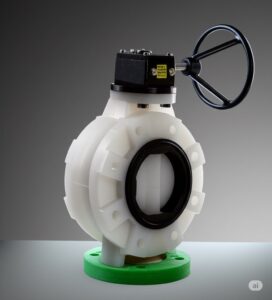
TL;DR: Select actuated PVDF valves by comparing electric vs pneumatic actuation, defining fail-safe behavior, cycle rate, and control interface, and confirming torque margin and seal compatibility for corrosive or high-purity service.
Actuated PVDF valves automate flow control and shutoff in corrosive and high-purity systems. The most common decision is electric vs pneumatic actuation, followed by fail-safe behaviour, cycle rate, and materials compatibility. This guide explains how to choose and what to specify.
When you should actuate a PVDF valve
- Process automation: remote open/close, batch control, interlocks.
- Safety: emergency shutdown (ESD) requirements.
- Consistency: reduce operator variation in critical steps.
- Frequent cycling: where manual operation is impractical.
Electric vs pneumatic actuators (how to pick)
Electric actuation
- Best for: sites without instrument air, simple on/off automation, moderate cycling.
- Strengths: simpler utilities, straightforward wiring and control.
- Watch-outs: torque margin, duty cycle, enclosure rating, and response time.
Pneumatic actuation
- Best for: high cycle rates, fast response, and fail-safe action.
- Strengths: robust in harsh environments; easy spring-return options.
- Watch-outs: requires clean, dry instrument air; needs solenoids and air prep.
Fail-safe behaviour (fail open, fail closed, fail last)
Decide what must happen on loss of power or air:
- Fail closed: common for isolating hazardous chemicals.
- Fail open: used where flow is needed to protect equipment (cooling, purge).
- Fail last: electric actuators often stay in last position unless designed otherwise.
Torque, seats, and why chemical compatibility still matters
PVDF valve bodies handle many chemicals well, but actuator selection must account for:
- Seat and seal materials: swelling or hardening can increase torque over time.
- Temperature: affects both valve torque and allowable pressure.
- Cycle rate: accelerates wear; pick a valve/seat design intended for the duty.
Specification checklist
- Valve type: ball/butterfly/diaphragm/control valve (and size).
- Service: chemical name, concentration, temperature.
- Pressure: normal and maximum (include spikes if known).
- Actuation: electric or pneumatic; on/off vs modulating.
- Fail-safe requirement: fail open/closed/last.
- Cycle rate: cycles per hour/day and expected life.
- Control interface: voltage, signal type, feedback switches/positioner.
- Environmental: indoor/outdoor, washdown, enclosure rating.