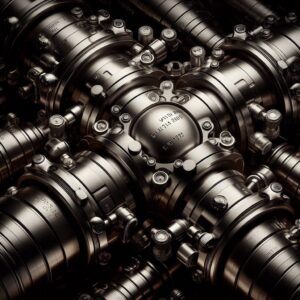
TL;DR: PVDF diaphragm valves excel in slurries and corrosive chemical service because their design isolates the actuator from the media, providing a leak-proof seal and simplified maintenance in the most aggressive environments.
PVDF diaphragm valves have earned a strong reputation in industries where handling corrosive chemicals safely and efficiently is critical. Their unique material composition and design make them highly suitable for aggressive chemical environments, combining durability, chemical resistance, and reliable operation. For more on how these compare to other valve styles, see our PVDF valves guide.
Exceptional Chemical Resistance
Polyvinylidene fluoride (PVDF) is a fluoropolymer known for its outstanding chemical resistance. It withstands exposure to strong acids, bases, and solvents that typically degrade metal valves. This allows PVDF diaphragm valves to be used in harsh chemical processing, including acids like sulfuric and hydrochloric acid, aggressive alkalis, and various organic solvents.
Maintenance Guide: PVDF Diaphragms
Proper maintenance ensures zero-leak performance and extends the life of the fluoropolymer body.
| Component | Action | Frequency |
|---|---|---|
| Diaphragm | Inspect for cracks/pitting | Every 6-12 months |
| Actuator | Lubricate moving parts | Annual |
| Seal Surface | Check for scaling/fouling | Per process cycle |
| Fasteners | Verify torque settings | After first 50 cycles |
Durable and Lightweight Design
Compared to metal valves, PVDF valves offer a significant weight advantage, simplifying installation and reducing mechanical stress on piping systems. The diaphragm valve design ensures a leak-proof seal by isolating the actuator from the fluid with a flexible diaphragm, reducing wear and extending valve life.
Frequently Asked Questions
Yes. Unlike ball or gate valves, diaphragm valves have no dead spaces where solids can accumulate and cause wear. The smooth flow path and flexible diaphragm make them excellent for abrasive slurry service.
Signs of diaphragm wear include leakage around the bonnet, increased resistance during operation, or visible cracking/pitting on the wetted surface during routine inspection. Most systems use a predictive schedule based on cycle counts.
Corrosion Resistance Extends Valve Lifespan
The superior corrosion resistance protects against pitting, contamination, and degradation, which are common failure modes in handling corrosive fluids. This translates to reduced maintenance frequency and lower replacement costs — vital in process industries aiming for continuous, uninterrupted operation.
High Purity and Non-Contaminating
PVDF is also highly inert and non-reactive, making it well-suited for industries where purity is vital, such as pharmaceuticals and food processing. The valve materials do not leach contaminants or react with sensitive fluids, ensuring clean, uncontaminated flow paths. Our PVDF valve types and materials guide covers these selection criteria in detail.
Versatility Across Applications
PVDF diaphragm valves are found in diverse sectors beyond chemicals, including water treatment, semiconductor manufacturing, and biotechnology. Their resistance to both chemical attack and ultraviolet radiation adds to their broad utility. This versatility is shared with PVDF butterfly valves in larger scale systems or PVDF ball valves for on/off service.
Ease of Maintenance
The diaphragm in PVDF valves can be replaced separately without dismantling the valve body, allowing quicker maintenance and less downtime. Additionally, the valves operate smoothly and require less frequent actuator servicing.
PVDF diaphragm valves balance premium material properties with practical design, making them a reliable choice for corrosive chemical handling. When selecting valves for aggressive process fluids, considering the options in our PVDF valve selection guide can lead to safer, more cost-effective operations. For a full list of technical resources, visit our Knowledge Base or the Home Page.