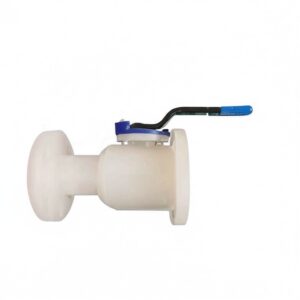
TL;DR: Valve reliability is determined by the whole assembly, not just the body material. For chemical service, the parts that usually fail first are seats, seals, packing, and interfaces. Understand the components so you can specify the right wetted bill of materials and avoid recurring leaks.
Most purchasing specs focus on the valve body (“PVDF,” “stainless,” “PTFE lined”). In real plants, leakage and performance problems usually start in the soft parts and interfaces—seats, O-rings, diaphragms, and packing. This overview breaks down the major valve components and what to check when selecting or troubleshooting valves in chemical service.
Core valve components (what they do)
Body
The pressure-containing shell. In chemical service, body compatibility matters, but it is only one piece of the wetted system.
Bonnet / cover
Closes the body and supports stem/shaft sealing. Bonnet interfaces can be leak points if gaskets or O-rings are misapplied.
Stem / shaft
Transmits motion from the handle/actuator to the closure element. Stem finish, alignment, and chemical attack strongly influence packing life.
Closure element (ball, disc, plug, diaphragm)
This is the moving part that opens/closes the flow path. Its geometry affects throttling suitability, cavitation risk, and debris tolerance.
Seats
Seats create shutoff. They also influence operating torque, wear, and whether the valve can tolerate debris.
Seals (O-rings, gaskets, diaphragms)
Seals prevent leakage at joints and around moving parts. In chemical service, seals are often the first compatibility failure.
Packing (stuffing box)
Packing seals around a moving stem. It is adjustable and serviceable, but repeated tightening can accelerate wear.
Related: Valve Packing: Types and Installation.
Wetted bill of materials (BOM): what to list
- Body and closure element material
- Seat material(s)
- O-rings / gaskets / diaphragms
- Packing material
- Any coatings/linings in wetted areas
Related: Seal, Seat, and O-Ring Materials for PVDF Valves.
How components drive common problems
- Stem leak → packing wear, stem damage, or incompatible packing/seals.
- Can’t shut off → seat damage, debris, or wrong valve type for service.
- High torque → over-tight packing, seat friction, deposits, or misalignment.
- Unexpected corrosion → seals or metal inserts attacked even if the body is compatible.
Quick specification template
- Valve type + size + end connection
- Function: on/off vs throttling
- Pressure/temperature envelope (including cleaning/upsets)
- Full wetted BOM (body + seats + seals + packing)
Related engineering resources
- Chemical Valve Selection Guide
- Valve Packing Leak Troubleshooting
- Valve Corrosion: Root Causes and Prevention
- Share your chemical and failure mode for recommendations
Frequently Asked Questions
Soft parts see movement, compression, and chemical exposure. They can swell, harden, crack, or creep with temperature and chemistry changes. The body can remain intact while seals or seats lose shutoff or start leaking.
The full wetted BOM: body, closure element, seats, O-rings/gaskets/diaphragms, and packing. If the valve is lined, include the lining material and interface seals.
Common causes include deposits, seat wear, over-tight packing, swelling seals, or misalignment. High torque is often an early warning sign that leakage or seizure is coming.